
Overview
A bank account for a 16 year old in the UK is a youth or under 18 bank account designed for teenagers. It allows you to manage money, receive payments, and use a debit card, usually without overdraft access and often with parental consent or verification.
Introduction
Managing money independently often starts during your teenage years. In the UK, turning 16 is a key milestone—you can legally open a bank account in your own name. With more teens earning part-time income or receiving allowances, having a dedicated account is increasingly important.
According to the Office for National Statistics, a growing number of UK teenagers are engaged in part-time work or informal earnings, making early financial education essential. At the same time, digital banking has made it easier than ever for young people to access financial services safely.
This guide explains everything you need to know about opening and using a bank account for 16 year old in the UK. You will learn how these accounts work, what documents are required (including options for a teen bank account no id), and how to avoid common mistakes.
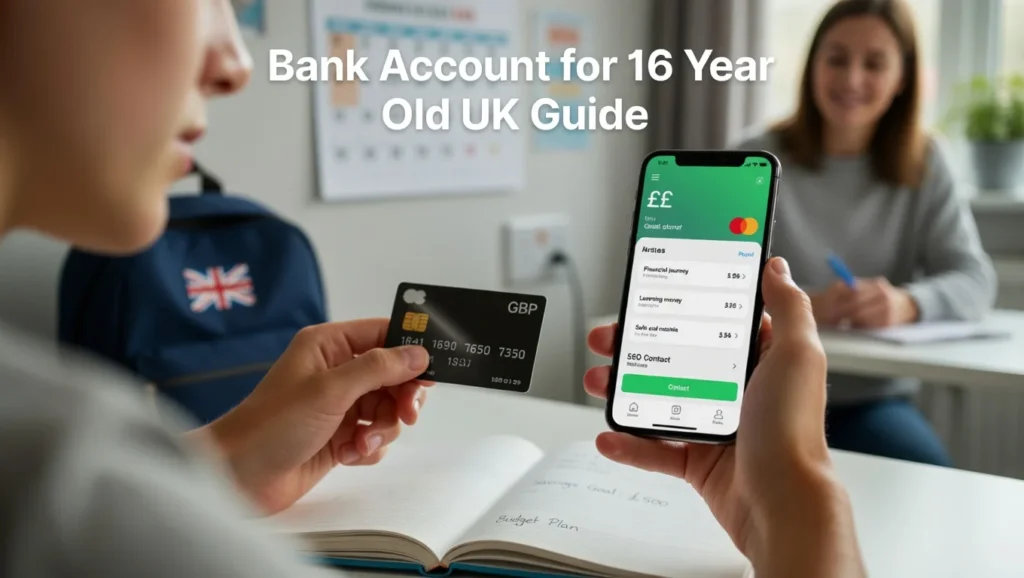
[IMAGE: Teen using mobile banking app with debit card in UK setting]
Key Takeaways
- You can open an under 18 bank account at age 16 in the UK
- Most accounts include a debit card but no overdraft facility
- Some banks accept alternative ID if you don’t have a passport
- Parental involvement may still be required in some cases
- Surprising: Many teen accounts offer budgeting tools but no interest on balances
What is a Bank Account for 16 Year Old? (A UK Guide for Beginners)
A bank account for 16 year old is a type of youth or student account tailored for teenagers aged 16–17. These accounts are designed to help you manage money safely while learning basic financial skills.
Typically, these accounts include:
- A debit card for spending
- Online and mobile banking access
- No overdraft or credit facilities
They are commonly used by:
- Students receiving allowances or grants
- Teens with part-time jobs
- Young people managing savings or expenses
In the UK, banks offer these accounts under strict regulations set by the Financial Conduct Authority to ensure safety and transparency.
How Bank Account for 16 Year Old Works in the UK
Opening and using a bank account for 16 year old typically follows these steps:
- Choose a suitable bank
Compare youth or student account for 16 year olds options from UK banks. - Provide identification
Usually a passport or provisional driving licence. Some banks allow alternative ID for a teen bank account no id. - Verify your address
Documents like a school letter or utility bill may be accepted. - Parental involvement (if required)
Some banks require a parent or guardian to co-sign. - Account setup
Once approved, you receive account details and a debit card. - Start using the account
You can deposit money, receive payments, and spend using your card. - Use digital tools
Many accounts include budgeting apps and spending alerts.
Takeaway: Opening an account is straightforward, but ID and verification requirements vary by bank.
Real UK Examples & Scenarios
Here are realistic examples of how teens use bank accounts:
Example 1: London Student
A 16-year-old in London receives £50 weekly allowance and uses a debit card for transport and food.
Example 2: Manchester Part-Time Worker
A teen earning £300/month deposits wages into their account and tracks spending via mobile banking.
Example 3: Birmingham Saver
A student saves £20 weekly toward a laptop purchase using a youth account.
Comparison Table
| Scenario | Situation | Outcome | Key Lesson |
|---|---|---|---|
| London student | Weekly allowance (£50) | Learns budgeting | Daily tracking helps control spending |
| Manchester worker | Monthly income (£300) | Gains financial independence | Early banking builds money habits |
| Birmingham saver | Saving £20/week | Buys laptop in 6 months | Consistency leads to goals |
Pros and Cons of Bank Account for 16 Year Old
| Pros | Cons |
|---|---|
| Helps build financial habits early | No overdraft facility |
| Easy access via mobile banking | Limited interest on savings |
| Safe way to manage money | ID requirements may be strict |
| Encourages budgeting skills | Some parental control restrictions |
| Widely available across UK banks | Limited financial products |
Key Factors That Affect Bank Account for 16 Year Old in the UK
- Identification Requirements
Most banks require ID, but alternatives exist for a teen bank account no id. - Parental Consent
Some banks require a parent or guardian, depending on policies. - Bank Policies
Each bank offers different features and restrictions. - Digital Access
Mobile banking features vary between providers. - Security Measures
FCA regulations ensure fraud protection and account safety. - Financial Education Tools
Some accounts include budgeting insights and alerts. - Accessibility
Online-only vs branch-based account opening options.
Common Mistakes UK Consumers Make
- Not checking ID requirements in advance
This can delay account approval. - Ignoring account features
Not all teen accounts offer the same tools. - Overlooking parental involvement rules
Some banks require a guardian’s presence. - Using the account like a credit facility
Remember: no overdraft means limited spending. - Not monitoring spending regularly
This can lead to poor financial habits.
[Internal Link: Related Article on budgeting for teens]
Expert Insight Box
“Youth bank accounts are designed to introduce financial responsibility while limiting risk. Parents and young people should understand account features and protections before opening one.”
— MoneyHelper
Is Bank Account for 16 Year Old Worth It for UK Users?
A bank account for 16 year old is generally worth it if you:
- Earn money from part-time work
- Want to learn budgeting early
- Need a secure way to manage funds
It may not be ideal if you:
- Prefer cash-only budgeting
- Lack required identification
- Are not ready to manage spending responsibly
Alternatives include prepaid cards or savings accounts for younger teens.
UK Regulatory Information
The Financial Conduct Authority oversees UK banking regulations, ensuring accounts are fair and secure.
You are protected by:
- Fraud prevention rules
- Clear fee disclosures
- Secure banking systems
For guidance, visit MoneyHelper, which offers free, unbiased financial advice.
Conclusion & Next Steps
Opening a bank account for 16 year old is a smart step toward financial independence.
Key takeaways:
- You can open an account at 16 with basic ID
- These accounts are safe and regulated
- They help build lifelong money skills
Next steps:
- Compare UK youth accounts
- Check ID requirements
- Start managing your money responsibly
Frequently asked questions UK student accounts
Yes, many UK banks allow 16-year-olds to open accounts independently. However, some may still require parental verification depending on their policies and risk checks. Providers like Santander, Lloyds, and Halifax often offer dedicated under-19 accounts that can be opened without a parent present if you have valid ID and proof of address.
While most banks require ID, some accept alternative documents like school letters, college enrolment confirmation, or National Insurance proof. Digital challenger banks (like Monzo or Starling for 16+) may accept a valid passport or birth certificate alongside a letter from school. Requirements vary by provider, so check individual eligibility criteria.
No, under 18 bank accounts do not offer overdrafts. This protects young users from debt and financial risk. Banks purposely exclude arranged overdraft facilities on child and teen accounts to encourage responsible money management. Debit card spending is limited to the available balance.
Yes, most student account for 16 year olds include a debit card for everyday spending. Typically it’s a contactless Visa or Mastercard debit card that allows online purchases, ATM withdrawals, and chip & PIN payments. Some accounts also offer app-based spending controls and instant notifications.
The best account depends on features like mobile banking, parental controls, and ease of access. Compare options based on your needs. Popular choices include the NatWest Adapt Account (for 11-17), Santander 123 Mini, Lloyds Under-19s account, and digital accounts like GoHenry or Hyperjar (though some have monthly fees). Look for no monthly fees, a user-friendly app, and flexible access.
Yes, employers can pay wages directly into a teen’s bank account, making it convenient for part-time workers. Standard bank accounts for 16+ generally support BACS and Faster Payments, so salary, apprenticeship wages, or weekly earnings can be deposited without any restrictions. Just provide the employer with your sort code and account number.