
Introduction
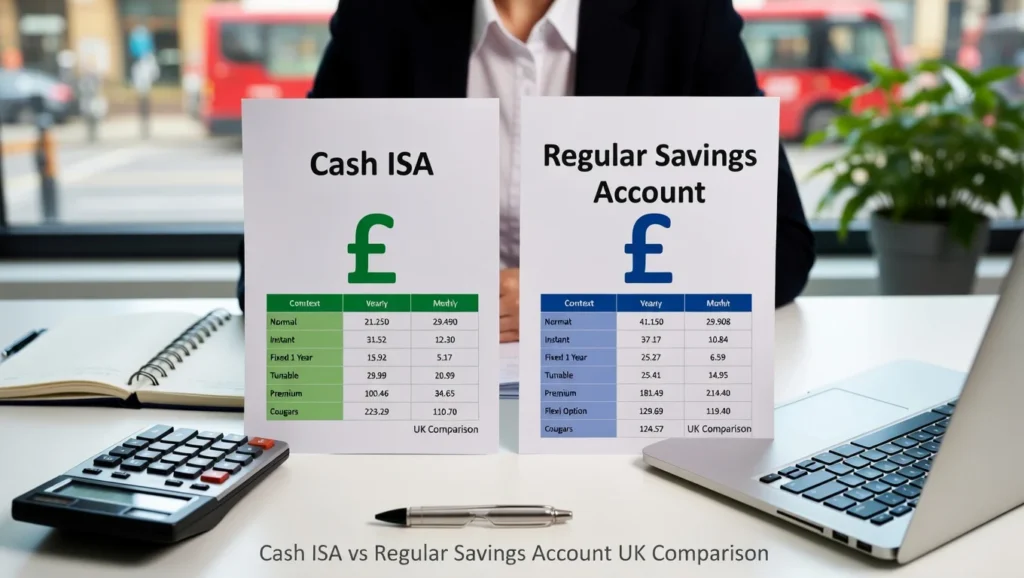
Saving money is an important part of financial planning in the UK, especially when you want to protect your savings from tax. Many people compare Cash ISAs and regular savings accounts when deciding where to keep their money. While both options allow you to earn interest on your savings, the tax treatment and rules can be quite different.
Understanding the differences between these two accounts can help you decide which one fits your financial goals. For example, some savers prioritise tax-free interest, while others focus on flexibility or higher interest rates.
In this guide, you will learn how Cash ISA vs Regular Savings Account in the UK compares in terms of tax benefits, limits, flexibility, and suitability for different types of savers. The aim is to help you make an informed decision about where your savings might work best.
Takeaway: Knowing how each savings option works helps you protect your interest earnings and organise your finances more efficiently.
Key Takeaways
• Cash ISAs allow tax-free interest, meaning you do not pay income tax on the interest earned.
• Regular savings accounts may offer competitive rates, but interest may be taxable depending on your Personal Savings Allowance.
• The annual ISA allowance (£20,000 for the current tax year) limits how much you can deposit.
• Your choice often depends on tax position, flexibility needs, and savings goals.
Takeaway: Cash ISAs focus on tax efficiency, while regular savings accounts may offer flexibility and competitive interest rates.
What Is Cash ISA vs Regular Savings Account in the UK?
When discussing Cash ISA vs Regular Savings Account in the UK, the comparison centres on how interest is taxed and how each account operates.
A Cash ISA (Individual Savings Account) is a savings product that allows you to earn interest free from UK income tax. Each tax year, you can deposit up to the government-set ISA allowance.
A Regular savings account, on the other hand, is a standard bank savings account. Interest earned may be subject to tax if it exceeds your Personal Savings Allowance (PSA).
For many UK savers, the choice between the two depends on income level, tax status, and the amount they plan to save.
Takeaway: The key difference is taxation—Cash ISAs offer tax-free interest, while regular savings accounts may not.
How Cash ISA vs Regular Savings Account Works in the UK
Understanding the process helps you compare the two options clearly.
Cash ISA
• Open a Cash ISA with a UK bank, building society, or authorised provider.
• Deposit money up to the annual ISA allowance (£20,000).
• Interest earned is completely tax-free.
• Funds may be in easy access, fixed-rate, or notice ISAs.
• Withdrawals depend on the account type.
Regular Savings Account
• Open a savings account with a bank or building society.
• Deposit money without the ISA annual limit.
• Interest is added periodically (monthly or annually).
• Interest may be taxed if it exceeds your Personal Savings Allowance.
• Typically offers more flexibility for deposits and withdrawals.
Takeaway: Cash ISAs provide tax protection, while regular savings accounts usually provide fewer restrictions.
Practical UK Examples
Real-life scenarios can illustrate how these accounts differ.
| Scenario Type | Savings Amount | Account Type | Outcome |
|---|---|---|---|
| Beginner saver | £5,000 | Cash ISA | Interest earned remains tax-free |
| Higher-rate taxpayer | £15,000 | Cash ISA | Avoids paying tax on interest |
| Small saver | £3,000 | Regular savings account | Interest likely within Personal Savings Allowance |
Another example comparing potential results:
| Scenario | Annual Interest Rate | Interest Earned | Tax Impact |
|---|---|---|---|
| Cash ISA | 3.5% | £350 on £10,000 | £0 tax |
| Regular savings account | 3.5% | £350 on £10,000 | May be taxed depending on income |
Takeaway: Tax treatment becomes more important as savings grow or income increases.
Pros and Cons
| Pros | Cons |
|---|---|
| Cash ISA interest is tax-free | Annual deposit limit |
| Suitable for long-term tax-efficient savings | Some ISAs restrict withdrawals |
| Regular savings accounts can be flexible | Interest may be taxable |
| Regular accounts sometimes offer higher promotional rates | Tax rules may reduce net returns |
Takeaway: Each option has advantages depending on your financial circumstances.
Key Factors That Affect Cash ISA vs Regular Savings Account
Several factors influence which option may suit you.
• Personal Savings Allowance – Basic-rate taxpayers may earn some interest tax-free already.
• Income tax bracket – Higher-rate taxpayers often benefit more from Cash ISAs.
• Savings amount – Larger balances may generate taxable interest in regular accounts.
• Interest rates available – Some savings accounts offer competitive rates compared with ISAs.
• Access to funds – Some Cash ISAs have withdrawal restrictions.
Takeaway: Tax position and access requirements are usually the most important considerations.
Common Mistakes to Avoid
Many savers misunderstand how these accounts work.
One common mistake is assuming a Cash ISA always offers the highest interest rate. In reality, some regular savings accounts may offer higher rates even after tax.
Another mistake is forgetting about the Personal Savings Allowance, which already allows many savers to earn interest tax-free up to certain limits.
Some people also overlook withdrawal restrictions in fixed-rate Cash ISAs, which could limit access to funds.
Takeaway: Comparing rates, tax rules, and flexibility helps avoid choosing the wrong savings product.
Is Cash ISA vs Regular Savings Account Worth It for UK Users?
The value of choosing between these two options depends on your financial situation.
A Cash ISA may be particularly useful if you expect your savings interest to exceed your Personal Savings Allowance. It can also be helpful for building long-term tax-efficient savings.
A regular savings account may suit those with smaller balances or those who prioritise flexibility and easy withdrawals.
Ultimately, many UK savers use both types of accounts as part of a balanced savings strategy.
Takeaway: Your income level and savings goals determine which option may provide the most benefit.
Regulatory Information (UK Specific)
Savings accounts and ISAs offered in the UK are regulated by the Financial Conduct Authority (FCA). Providers must follow consumer protection rules and provide transparent information about interest rates, fees, and withdrawal conditions.
Deposits held with authorised banks and building societies are usually protected by the Financial Services Compensation Scheme (FSCS). This scheme currently protects eligible deposits up to £85,000 per person per financial institution.
These protections help ensure consumer confidence in the UK savings market.
Takeaway: Regulation and deposit protection add an important layer of security for savers.
Conclusion
Choosing between Cash ISA vs Regular Savings Account in the UK depends largely on your tax situation, savings goals, and need for flexibility. Cash ISAs provide tax-free interest and can be valuable for higher earners or those building long-term savings.
Regular savings accounts may offer competitive interest rates and easier access to funds, making them suitable for shorter-term financial goals.
Before deciding, it can be useful to compare interest rates, tax implications, and withdrawal rules. Evaluating these factors carefully helps ensure your savings strategy aligns with your financial priorities.
Frequently Asked Questions ISA & savings
Is a Cash ISA better than a regular savings account?
A Cash ISA is not automatically better. Its main advantage is tax-free interest. However, if your savings interest stays within your Personal Savings Allowance, a regular savings account with a higher rate may provide similar or better returns.
How much can you save in a Cash ISA each year?
For the current UK tax year, the ISA allowance is £20,000. This limit applies across all ISA types combined, including Cash ISAs, Stocks and Shares ISAs, and Innovative Finance ISAs.
Do you pay tax on regular savings accounts in the UK?
Interest from regular savings accounts may be taxable. However, most UK savers benefit from the Personal Savings Allowance, which allows basic-rate taxpayers to earn up to £1,000 of interest tax-free each year.
Can you have both a Cash ISA and a regular savings account?
Yes, you can hold both types of accounts at the same time. Many savers use a regular savings account for flexibility and a Cash ISA for tax-efficient long-term savings.